
The Palmer Law Firm
  • Home
    • Family Law Services
  • About Us
    • The Latest News
    • Why Choose Us?
    • League City
    • Friendswood
    • La Porte
    • Seabrook
  • Mediation Services
  • FREE CONSULTATION
  • CALL: 832-819-3529
  • Resources
    • Blog
    • Our Latest Articles
    • Divorce by County >
      • Brazoria County
      • Chambers County >
        • Beach City
        • Mont Belvieu
        • Old River-Winfree
        • Seabrook
      • Galveston County >
        • Bayou Vista
        • Bayview
        • Bolivar Peninsula
        • Clear Lake Shores
        • Crystal Beach
        • Dickinson
        • Friendswood
        • Galveston City
        • Hitchcock
        • Jamaica Beach
        • Kemah
        • La Marque
        • Port Bolivar
        • Tiki Island
        • Texas City
      • Harris County >
        • Bellaire
        • Bunker Hill Village
    • Divorce for Medical Professionals

Left Behind: How Texas Dads Can Fight for Custody After a Surprise Out-of-State Move

7/22/2025

 
It’s a common but heart-wrenching story. A father finds out that the mother of his child has suddenly packed up, moved to another state, and taken the child with her—without a court order, and without his consent. He’s left behind, wondering what rights he has, whether Texas courts still have authority to intervene, and how to even begin the process of asserting his parental rights. If this sounds like your situation, read on—there’s good news and some critical steps you need to take immediately.

No Custody Orders? You're Not Alone.
Many unmarried or divorcing parents find themselves in legal limbo when no formal custody orders have been issued. Without a signed court order determining conservatorship (custody), possession, and access, both parents technically have equal rights to the child under Texas law. That means that although the mother may have taken the child across state lines, she hasn't necessarily broken the law—but that doesn’t mean she’s immune from legal consequences, either.

Jurisdiction Starts at Home.
The first issue to address is whether Texas courts can even hear your case. In legal terms, this is called jurisdiction. For custody and visitation matters, Texas follows the Uniform Child Custody Jurisdiction and Enforcement Act (UCCJEA). Under the UCCJEA, the “home state” of the child—where the child has lived with a parent for at least six consecutive months immediately before the start of the case—has exclusive jurisdiction to make initial custody determinations.

What if the Child Has Left Texas?
If the child lived in Texas for at least six months before the mother left the state, Texas is still the home state—even if the child is now residing elsewhere. That means Texas courts can still assert jurisdiction to issue initial custody orders. But timing matters. The longer the child stays gone, the weaker the jurisdictional argument becomes. That’s why acting quickly is critical.

What if the Child Hasn’t Lived in Texas Long Enough?
Let’s say the child recently moved to Texas and didn’t reside here for a full six months. In that case, the court will look to the child’s previous home state—perhaps Nebraska, Pennsylvania, or wherever the child lived before. But if no other state qualifies under the UCCJEA as the home state, Texas may still exercise jurisdiction if the child and at least one parent have significant connections here, and if substantial evidence about the child’s care is available in Texas.

The Challenge of Service of Process.
Filing a custody case is only half the battle. You must also properly serve the other parent with legal notice of the case. If the mother is now living out of state, service becomes more complicated—but not impossible. Texas allows service of process outside the state, but you must strictly follow both Texas rules and those of the state where she currently lives. Failure to serve her correctly could delay your case or even get it dismissed.

Filing for Divorce and Custody Together.
If you’re married to the child’s other parent, filing for divorce in Texas can allow you to request temporary custody orders immediately, even before the final divorce is granted. Texas allows divorce filings as long as you have been a resident of the state for at least six months and of the county for at least 90 days. So long as Texas is the child’s home state (or qualifies under the UCCJEA’s fallback rules), a Texas judge can also rule on custody during the divorce.

Emergency Jurisdiction: A Limited but Powerful Tool.
If your child is in immediate danger—say, due to neglect, abuse, or unstable living conditions in the new state—Texas courts can assert temporary emergency jurisdiction. But this is reserved for truly urgent situations and won’t result in permanent custody orders unless Texas becomes the home state or the other state declines jurisdiction.

Don’t Wait—Silence Can Be Misconstrued.
One of the biggest mistakes a parent can make is doing nothing. If the other parent remains in another state long enough with the child, that state could eventually become the new home state. And if you haven’t taken legal action, you risk being seen as indifferent or acquiescent to the move. Courts prefer to see that you acted swiftly and responsibly to protect your parent-child relationship.

Document Everything.
While you're preparing to file, keep detailed records of all communications with the other parent, including text messages, emails, and call logs. Make note of when the child was removed from the state, what notice (if any) you were given, and whether you've had access to your child since the move. This documentation may become key evidence in your custody case.

Talk to a Texas Family Lawyer Now.
​
Every situation is unique, and when your child’s well-being and your parental rights are at stake, you don’t want to navigate this alone. A Texas family law attorney can help you evaluate whether Texas has jurisdiction, prepare your filings, ensure proper service, and advocate for your rights in court. Custody cases with multi-state issues are complex—but not hopeless. If you act now, you can protect your relationship with your child and bring stability back to your family’s life.

Need Help Now?
If you’re facing a custody situation like this in Texas, call The Palmer Law Firm to schedule a confidential consultation. Let’s figure out your next step—before it’s too late.

Are Family Courts Biased Against Men?

2/1/2023

 
Picture
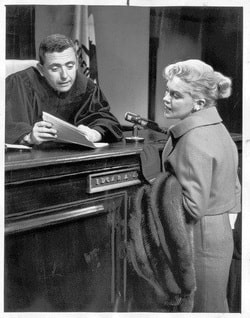
In the realm of family court, particularly in custody battles, many fathers report feeling sidelined due to perceived gender bias. They often enter the court system expecting impartiality, as prescribed by law, only to discover that the deck seems stacked against them. This is a concern that gains gravity when considering the gender imbalance in various court roles—from judges and clerks to hearing officers.

Roots of Perceived Gender Bias in Family Courts
To understand why this bias is perceived, we need to delve into traditional family roles and their impact on the family court system. In a conventional family setup, men are usually seen as the providers, while women are considered the primary caregivers. These roles naturally evolve in many families, with mothers taking the helm on tasks like scheduling doctor's appointments, handling school matters, and daily childcare. Fathers, conversely, focus on providing financial support and may not be as involved in daily caregiving activities.

Texas case law echoes the sentiment that the court's focus is on the "best interests of the child." Specifically, in the case of In re McLean, 725 S.W.2d 696, 698 (Tex.1987), the court underlines that child custody decisions are guided by what best serves the child's well-being. This principle is also emphasized in In re M.S.F., 383 S.W.3d 712, 716-17 (Tex.App.--Amarillo 2012, no pet.). Often, however, the "best interests" criteria can inadvertently align with traditional gender roles, disadvantaging fathers. For instance, a father who does not know the date of his child's next doctor's appointment may be judged as less competent in parenting, irrespective of the division of roles in the family.

Furthermore, Texas Family Code Section 153.003 explicitly states, "The court shall consider the qualifications of the parties without regard to their marital status or to the sex of the party or the child in determining [...] which parent to appoint as sole managing conservator." While the law prescribes impartiality, its practical application can sometimes deviate, reflecting societal norms and expectations.

Preparing for Custody Battles: Strategies for Fathers
Given the landscape, it's critical for fathers to be proactive if they suspect that they might encounter bias in court. Here are some crucial steps:
  1. Do Not Leave the Family Residence Without an Agreement: It’s vital to have a mutually agreed-upon, written timesharing schedule before you leave the family home. This establishes a pattern that the court can later consider.
  2. Avoid Emotional Snap Judgments: Leaving the home without a plan can let the mother set a new “status quo” for child care, which could disadvantage you in court later on.
  3. Be Proactively Involved: If you leave without an agreement, you effectively relinquish control, placing yourself at your spouse's mercy when it comes to sharing custody. This can influence how the court sees your parental involvement.

​By thoroughly understanding both the judicial perspective, as underlined by case law and statutes like Texas Family Code Section 153.003, and by taking preemptive action, fathers can better position themselves in what may feel like an uphill custody battle. While perceived gender bias may not be entirely eliminated overnight, knowing how to navigate the system can make a significant difference in the outcome of your case.

Top Five Myths About Single Fathers

4/3/2014

 
Picture
Since 1973, the number of father only families has increased at a faster rate than has the number of mother-only families.  Today, 15% of all single-parent families are headed by a father.  Fathers facing divorce should consider carefully any decision they make about child custody that is based on old, outmoded ideas of "traditional" roles.  And although they are  changing somewhat slower than the rest of society, the courts are coming around to the realization that fathers can make just as successful single parents as mothers.  So it is time to reexamine some of the old myths about single fathers.

Myth #1:  Fathers who gain custody were themselves products of single-parent families.

There is no evidence to suggest that fathers who are awarded custody of their children were raised in any specific way.  Studies in the 1980s show that 80% of fathers who are awarded custody grew up in a two-parent households, but this was likely to be the result of a generational difference because divorces were far less common in the 1950s and 1960s than they are today.  Today's single father can come from any kind of background and upbringing.

Myth #2: Custodial fathers have high incomes

It is well documented that there is an extremely high percentage of mother-only families that are below the poverty level.  What is less well know is that more than 18 percent of father-only families are poor.  Another 21 percent are just above the poverty line.  If there is a custody dispute, the ability to afford a child is indeed one of the factors the court will decide in determining who gets custody. Higher income will give one party and advantage- if combined with other factors.  But remember, the amount of income is only relative to the other parent.  If both parents receive the same amount of income, even if it is very little, this will not sway the courts.

Myth #3: Most Custodial Fathers have remarried.

Although custodial fathers are more likely to be married than custodial mothers, the fact is that most custodial fathers (59%) are not currently married. 

Myth #4:  Custodial Fathers primarily receive custody of older boys

This myth really has two parts: first, the fathers primarily obtained custody of older children and second that fathers are more likely to receive custody of boys.  It is true that the children living in father-only families are older than those living in mother-only families.  This may be a hang-over effect of the "tender-years doctrine" which favored women over men for custody of young children.  Many family courts followed the doctrine for years, but it has fallen aside with other stereotypes and is not a lawful factor in Texas courts.  Still, 17.5 percent of single-father families include children younger than three, and about a third contain a preschooler.  Similarly, although children in father-only families are somewhat more likely to be boys, 44 percent of all children in such families are girls.

Myth #5:  Most custodial fathers are widowers.

This may have been true at one time, but being a widower is not were you will find most custodial fathers today.  In fact, you will only find 7.5 percent of single father households being widowers today.  As a matter of fact, 24.5 percent of single father households are headed by never-married fathers.

Many fathers make their decisions about whether to seek custody based on outmoded ideas about what is acceptable in society and in the courts.  But these myths need to be busted and fathers need to based their decisions on the real and current facts.  If you are a father involved in a custody battle, you need to seek the truth from an experienced family law attorney who will help you separate fact from fiction.  For more information, please visit us at
www.bayshoreattorney.com

    Need more information about this or other family law topics in Texas?
    ​
    Click the button below to book a

    FREE ATTORNEY CONSULTATION
    Book Now
    (832) 819-3529
    Picture
    Attorney Sean Y. Palmer has over 20  years of legal experience as a Texas Attorney and over 25 years as a Qualified Mediator in civil, family and CPS cases. Palmer practices exclusively in the area Family Law and handles Divorce, Child Custody, Child Support, Adoptions, and other Family Law Litigation cases. He represents clients throughout the greater Houston Galveston area, including: Clear Lake, NASA, Webster, Friendswood, Seabrook, League City, Galveston, Texas City, Dickinson, La Porte, La Marque, Clear Lake Shores, Bacliff, Kemah, Pasadena, Baytown, Deer Park, Harris County, and Galveston County, Texas.
    Call
    ​ (832) 819-3529

    If you live in the Houston area and would like to consult with one of our attorneys, please leave your information below.

    Submit

      Sign Up for Our Free Texas Family Law Bulletin!

    Subscribe

    Archives

    December 2025
    November 2025
    October 2025
    September 2025
    August 2025
    July 2025
    June 2025
    May 2025
    April 2025
    March 2025
    January 2025
    December 2024
    October 2024
    July 2024
    June 2024
    May 2024
    April 2024
    January 2024
    December 2023
    November 2023
    October 2023
    September 2023
    August 2023
    July 2023
    May 2023
    March 2023
    February 2023
    January 2023
    September 2022
    July 2021
    April 2021
    March 2021
    February 2021
    August 2020
    July 2020
    June 2020
    May 2020
    April 2020
    March 2020
    February 2020
    July 2019
    June 2019
    November 2016
    October 2016
    August 2016
    July 2016
    June 2016
    May 2016
    April 2016
    January 2016
    December 2015
    November 2015
    October 2015
    September 2015
    August 2015
    July 2015
    June 2015
    May 2015
    April 2015
    August 2014
    July 2014
    June 2014
    May 2014
    April 2014
    March 2014

    Categories

    All
    Adoption
    Adultery
    Alimony (spousal Maintenance)
    Attorney Client Relationship
    Attorney-Client Relationship
    Bonuses
    Child Support
    Conflict Resolution
    Coronavirus
    Custody
    Disasters
    Divorce
    Divorce League City
    Embryos
    Grounds For Modification
    Harassment
    Holidays
    In Vitro Fertilization
    Legal Marriage
    Legislation
    Litigation
    Mediation
    Negotiation Strategies
    New Laws
    Parenting
    Pre Filing Considerations
    Pre-filing Considerations
    Prenuptial Agreement
    Property
    Property Rights
    Settlement
    Single Fathers
    Social Media
    Statistics
    Tax Consequences
    Texas Case Law
    Texas Divorce
    Torts

    RSS Feed

The Palmer Law Firm

www.thepalmerlawfirm.com
(c) 2025 Sean Y. Palmer

Visit our Google Business Profile for reviews, directions, and hours.
⭐ Leave Us a Review!
Leave Us a Review
​📍 Get Directions
Get Directions
DISCLAIMER:
​This website is for educational and informational purposes only and is not, nor is it intended to be,  legal advice. Viewing of this website does not create an attorney-client relationship. All legal matters should be discussed with a licensed attorney before you take any action. You should consult with an attorney for advice for your individual situation. Sean Y. Palmer is the attorney responsible for the content of this site. 


DATA NOTIFICATION:
Pursuant to the Health Insurance Portability and Accountability Act, and the Texas Medical Records Privacy Act of the Texas Health and Safety Code, consumers are noticed that their protected healthcare information may be transmitted electronically.​


​

  • Home
    • Family Law Services
  • About Us
    • The Latest News
    • Why Choose Us?
    • League City
    • Friendswood
    • La Porte
    • Seabrook
  • Mediation Services
  • FREE CONSULTATION
  • CALL: 832-819-3529
  • Resources
    • Blog
    • Our Latest Articles
    • Divorce by County >
      • Brazoria County
      • Chambers County >
        • Beach City
        • Mont Belvieu
        • Old River-Winfree
        • Seabrook
      • Galveston County >
        • Bayou Vista
        • Bayview
        • Bolivar Peninsula
        • Clear Lake Shores
        • Crystal Beach
        • Dickinson
        • Friendswood
        • Galveston City
        • Hitchcock
        • Jamaica Beach
        • Kemah
        • La Marque
        • Port Bolivar
        • Tiki Island
        • Texas City
      • Harris County >
        • Bellaire
        • Bunker Hill Village
    • Divorce for Medical Professionals

The Palmer Law Firm

Trusted League City Divorce Lawyer

Address: 550 N. Egret Bay Blvd, League City, TX 77573

Phone: (832) 819-3529

Email: [email protected]

  • League City Divorce Lawyer
  • Child Custody
  • Property Division
  • Spousal Support
  • Contact Us

© 2025 The Palmer Law Firm | League City Divorce Attorney | All Rights Reserved

This website is for informational purposes only and does not constitute legal advice. Viewing this site or contacting The Palmer Law Firm does not create an attorney-client relationship.